

Scent zoning: how to fragrance every room differently, like a five-star hotel
The finest hotels in the world never use the same scent throughout. The lobby breathes differently from the bedroom, and the bar smells nothing like the spa. The same principle can turn an ordinary home into an olfactory universe.
The short answer
Scent zoning means choosing a different fragrance for each room in your home, according to the role that space plays. Calm, woody notes in the bedroom, green, citrus notes in the kitchen, sensual, elegant notes in the living room. The result is a home that smells like an experience in its own right, not like a single product.
What scent zoning actually means
The term comes from sensory design and describes the use of different scents for different spaces. It is not a passing trend, but a natural extension of interior design.
Just as you choose colours, textures and lighting for each room, you can also build a distinct olfactory identity for every space.
The idea is simple: every room has its own function and its own energy. The bedroom is associated with quiet and rest. The kitchen with everyday life, shared meals and spontaneous conversation. The study with concentration. And fragrance can subtly support the mood you want to create in each of them.
Luxury hotels have used this principle for decades. The lobby has a memorable scent, designed to create a first impression. The rooms are calmer and more discreet. Spas favour green, aromatic accords, and restaurants build their own sensory world.
No two spaces smell the same, yet they all belong to the same story.
Why it matters at home
Home is where you spend most of your time, but it is also the place your brain learns to ignore most quickly.
The same happens with fragrance. If the scent is identical everywhere, after a while you barely notice it. If it is missing altogether, the space can feel neutral and lacking in personality. And if it is too strong or wrong for the setting, it becomes tiring.
Scent zoning creates balance. Each room takes on its own atmosphere, and moving from one room to the next becomes a subtly different experience.
A memorable home does not have a single scent. It has an olfactory identity built in layers.
We see every Little Paris Atelier candle as one piece of an olfactory puzzle. Some fragrances ask for daylight and open windows. Others work best in the evening, in quiet rooms. Some are made for long conversations around the table, others for moments of retreat and rest.
How to apply scent zoning in six rooms
Divide your home into six functional zones and choose a main fragrance for each. Think about scent exactly as you think about light, colour or texture: according to the mood you want to create.
Below you will find our recommendations and the candles that suit each space best.
1. The bedroom: scents that slow the pace
The bedroom is where the day should end a little more slowly. Choose calm, velvety, discreet fragrances: lavender, cedarwood, magnolia, musk or soft woody accords. These are scents that create a sense of quiet without dominating the space.
Our picks:
- Opera, Guaiac Wood, Lavender and Amber. Warm, elegant and balanced.
- Velvet Noir, Cedarwood, Lavender and Amber. Deeper and more present, ideal for generous bedrooms.
- Moonlight Bliss, Magnolia, Myrrh and Tonka Bean. Floral, intimate and soothing.
The atmosphere you are afterWarm light, fresh linen and a few minutes in which nothing asks for your attention.
2. The living room: scents that make people stay a little longer
The living room is the space for long conversations, evenings spent together and the moments when a home opens up to others. Choose warm, elegant, welcoming fragrances: tobacco, sandalwood, amber, vanilla or discreet spices.
Our picks:
- Downtown Baby, Tobacco, Vanilla and Tonka Bean. Warm and gently nostalgic.
- Spicy Romance, Sandalwood, Black Pepper and Amber. Bold and sensual.
- Nocturne, Oak Wood, Saffron and Vanilla. Deep and elegant.
The atmosphere you are afterA glass of wine, music playing softly and guests who forget to check the time.
3. The kitchen: bright, fresh scents
The kitchen is the liveliest space in the home. Green, citrus and aromatic scents suit it best: sage, lemon, petitgrain, grapefruit, basil or rosemary.
Our picks:
- Herbes d'Or, Sage, Petitgrain and Lemon. Fresh and green, like a Mediterranean garden after the rain. Perfect when you want to bring a sense of clean air to a busy kitchen.
- Champagne, Grapefruit, Pomelo and Rhubarb. Sparkling and energising, ideal for kitchens that open onto the living room, or for dinners where guests stay longer than planned.
- Orto di Luce, Tomato Leaf, Basil and Bergamot. Green, sunny and surprisingly natural. It almost feels like an extension of the fresh ingredients already on the worktop.
The atmosphere you are afterOpen windows, morning light and something good cooking slowly on the stove.
4. The bathroom: scents that turn a routine into a ritual
Few rooms respond to fragrance as quickly as the bathroom. Choose bright, clean, relaxing scents: linden blossom, hyacinth, lily of the valley, lemongrass or delicate fruit.
Our picks:
- May in Bloom, Linden Blossom and Honey. Delicate, luminous and comforting, like a late spring morning with the windows open.
- We Meet Again, Hyacinth, Lily of the Valley and Peach. Floral and fresh, with a quiet elegance that suits bathrooms bathed in natural light.
- Cosy Morning, Lemongrass, Ginger and Vanilla. Invigorating and warm at the same time. It evokes the same sense of wellbeing you find in a spa where time seems to flow more slowly.
The atmosphere you are afterFluffy towels, hot water and a few minutes in which you do not have to be anywhere.
5. The hallway and entrance: the scent that says welcome
The entrance is the first thing you sense when you come home and the first impression any guest receives. That is why the fragrance you choose here often becomes the signature of the whole home.
Look for bright, elegant, memorable scents. Citrus, neroli, musk or discreet woody accords create a sense of freshness without overwhelming the space.
Our picks:
- Nude Whisper, Orange, Bergamot and Agarwood. Bright at first, increasingly sophisticated as it settles into the room. The kind of fragrance that leaves an elegant impression without trying too hard.
- Maison d'Oranger, Neroli, Mandarin and Yuzu. Sunny, Mediterranean and full of light. It suits hallways where the sun comes in from early morning.
- Sea Blanche, Sea Salt, Water Lily and Musk. Clean, airy and slightly unexpected. A choice for those who want an olfactory signature that steps away from classic citrus.
The atmosphere you are afterThe feeling of arriving somewhere you want to stay.
6. The home office: scents that support concentration
A workspace needs fragrances that stay in the background. Present enough to create atmosphere, discreet enough not to distract you.
Green, woody and aromatic scents work best: vetiver, cedarwood, sage, lemongrass or ginger. They have a natural clarity that makes a space feel airier and more orderly.
Our picks:
- Cosy Morning, Lemongrass, Ginger and Vanilla. Bright and energising, perfect for the first hours of the day and long to-do lists.
- April Rain, Vetiver, Patchouli and Cedarwood. Green and elegant, with a quiet depth that encourages a slower pace and focus.
- Woodland Thoughts, Vetiver, Cedarwood and Saffron. Balanced and sophisticated, like a quiet library on a rainy afternoon.
The atmosphere you are afterA cup of coffee, a few hours without notifications and the feeling that you have time to focus on one thing.
At a glance: mapping the whole home
| Room | Olfactory family | Signature candles |
|---|---|---|
| Bedroom | Calm and comfort, soft woods, lavender | Opera, Velvet Noir, Moonlight Bliss |
| Living room | Sensual and elegant, tobacco, sandalwood, amber | Downtown Baby, Spicy Romance, Nocturne |
| Kitchen | Green and fresh, citrus, herbal | Herbes d'Or, Champagne, Orto di Luce |
| Bathroom | Bright and floral, white fruit, spa | May in Bloom, We Meet Again, Cosy Morning |
| Hallway | Citrus with woods, a memorable signature | Nude Whisper, Maison d'Oranger, Sea Blanche |
| Study | Green and softly woody, focus | Cosy Morning, April Rain, Woodland Thoughts |
Expert note
When choosing scents for the whole home, pay attention to the transitions between rooms. Two strong fragrances meeting in a small hallway will feel like a clash. The solution is to leave at least an hour between lighting two candles in neighbouring rooms, or to place the more delicate scent in the smaller room and the heavier one in the most airy space.
Where to start, in practice
If you are new to the idea, there is no need to transform the whole home at once.
Start with the two spaces where you spend the most time, usually the living room and the bedroom. Choose two different fragrances and notice how the atmosphere changes as you move from one room to the other.
That is the moment you really understand what scent zoning means. Not the theory, but the feeling.
After that, you can gradually extend the experience to the kitchen, bathroom, study or hallway. There are no strict rules and no perfect formula. What matters is that each space finds its own identity.
Over time, the home begins to feel different. Not because it smells stronger, but because every room tells part of the same story.
Discover Little Paris Atelier
Build your own olfactory map
All our candles are hand-poured in Bucharest from natural soy wax, with a wooden wick that crackles softly. Choose from the Signature collection the scents that can rewrite your home with a single box of matches.
Discover the Signature CollectionFrequently asked questions about scent zoning
How many different candles do I need for scent zoning?
Ideally one for each functional zone of the home, so between four and six. But you can start with two, bedroom and living room, and build up gradually. What matters is choosing scents from a coherent palette: not identical, simply not in conflict.
Can I use the same scent in the bedroom and the living room?
Technically yes, but you lose the scent zoning effect. The two rooms have very different roles, one for deep relaxation, the other for welcoming guests and conversation. A strong, sensual scent in the bedroom can feel too rich at night, while a calm scent in the living room can seem to lack atmosphere.
What about an open-plan flat where the kitchen is part of the living room?
In an open-plan space, choose a fresh scent that is not purely citrus, because it also has to work for the relaxing area. Cosy Morning and Nude Whisper both suit open-plan living because they combine a fresh element with a warm one. Light the kitchen candle after you have finished cooking, not while you cook.
How often should I light a candle for scent zoning to work?
It does not need to burn all the time. A candle lit for an hour a day already creates an olfactory association between the space and that moment. The key is consistency, not intensity. If you light Opera in the bedroom every evening for two weeks, your brain will begin to associate the scent with the relaxed state that comes before sleep.
Can I use diffusers instead of candles for scent zoning?
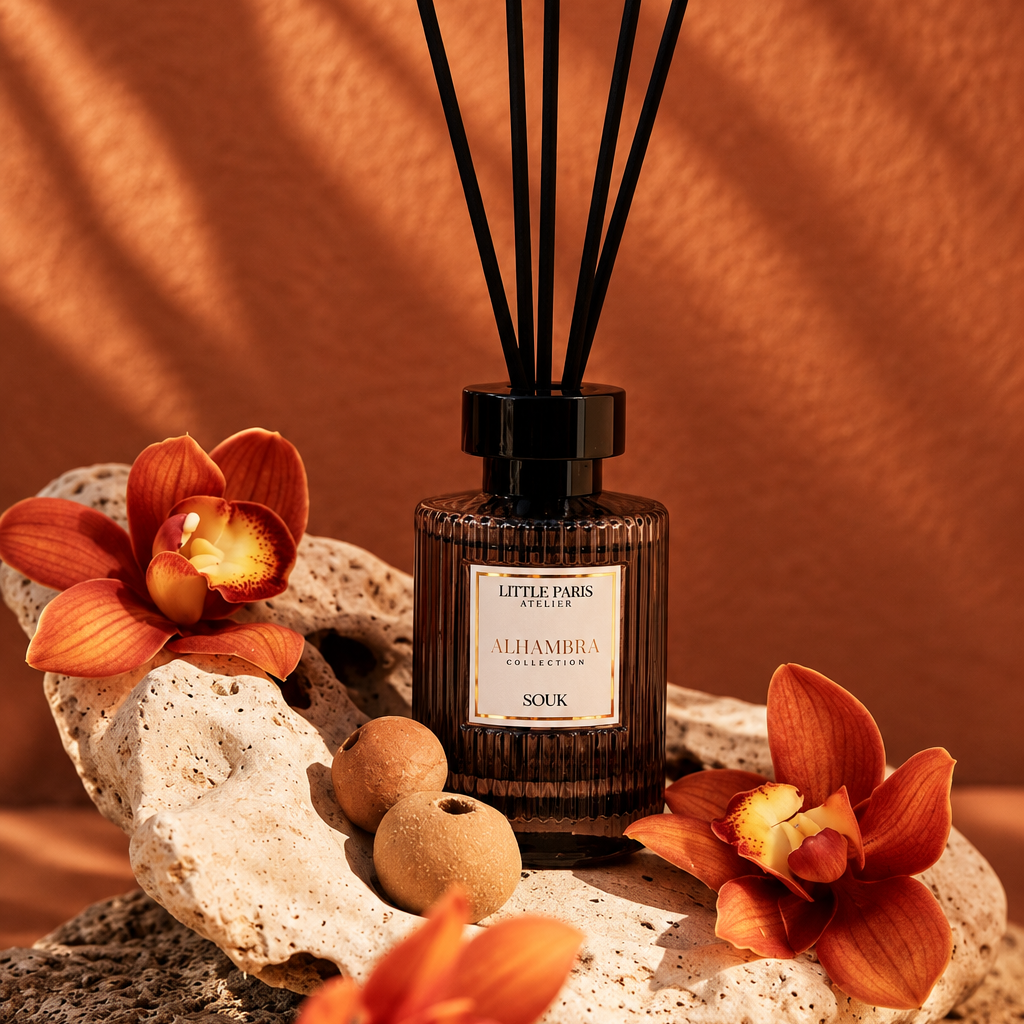
Yes, and in some rooms they are actually our first recommendation. For the bathroom in particular, a reed diffuser is the smart everyday choice: it works continuously, without supervision and without a flame near water and humidity, and the scent settles into textiles and towels, becoming part of your bathroom routine. Our reed diffusers use the same fragrance formulas as our candles, so you can keep olfactory coherence between rooms even when the format changes.


