
Sandalwood in perfumery: how it smells and why it is so widely used
Sandalwood is not a loud wood. It has neither the dry edges of cedarwood nor the earthy character we often associate with vetiver. Instead, it can have something creamy, warm, almost tactile about it. In perfumery, a note sometimes changes not only how a composition smells, but also how we feel it.
The short answer
Sandalwood is a woody note prized for its creamy, velvety and discreetly balsamic character. In perfumery, the term can mean the natural oil obtained from certain Santalum species or an accord built from several fragrant materials.
We find it in floral, woody and amber fragrances and in home fragrance compositions, where it can bring depth without dominating the whole.
What, exactly, is sandalwood?
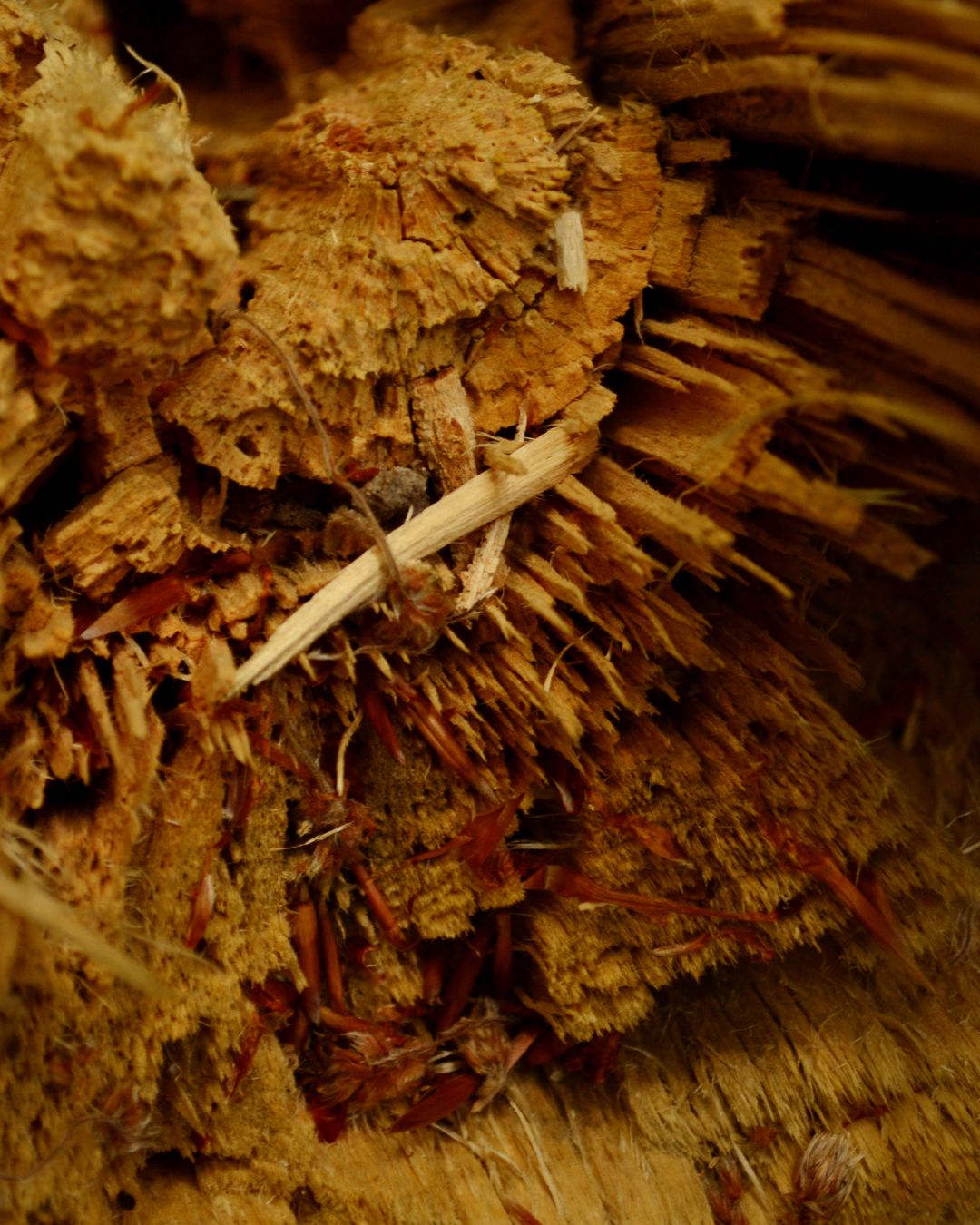
In perfumery, sandalwood is associated first and foremost with the aromatic wood of trees of the genus Santalum. The classic reference is Santalum album, known as Indian sandalwood. The essential oil is obtained mainly from the heartwood and, in some processing practices, from the roots.
The tree needs time to accumulate the aromatic compounds that make this material so valuable. The harvesting age and yield, however, vary with species, region and method of cultivation: there is no universal age at which every tree begins to produce quality oil.
Beyond botany, sandalwood has a particular role: it is one of those woods whose scent can feel closer to a texture than to the usual image of a forest.
How does sandalwood smell?
Three words return almost every time it is described: creamy, milky and velvety. Each captures something different.
Creamy describes the roundness of the scent. Compared with a dry cedarwood, with its accents of freshly sharpened pencil, classic sandalwood can feel softer and more continuous.
Milky does not mean it literally smells of milk. It is a delicate olfactory impression, sometimes close to coconut, warm wood or a sweetness without gourmand character.
Velvety is how we describe the feeling of quiet depth. Some interpretations of sandalwood stay close to the skin, while others have a surprisingly wide diffusion.
The profile is not identical across all raw materials or fragrances. Dry, balsamic, slightly spicy or green facets may appear, depending on the species and the composition in which the sandalwood is used.
Expert note
In sandalwood oil, α-santalol and β-santalol are among the important aromatic constituents. The ratio between them and the presence of other compounds contribute to the differences between oils. A modern sandalwood accord can highlight certain facets (creaminess or diffusion, for example) without fully reproducing the profile of a natural oil.
A history that begins long before modern perfumery
In India, sandalwood has a long history in religious practice, ceremonies and aromatic preparations. It has been used as wood, powder or fragrant paste, and its scent became associated with ideas of purity, calm and ritual.
Through trade and cultural exchange, sandalwood travelled far beyond the regions where it grows. In contemporary perfumery, this heritage meets a freer interpretation: sandalwood can be meditative and restrained, but also luminous, floral or sensual.
Indian sandalwood, Australian sandalwood and modern accords
Under the same name we find different botanical and olfactory realities. That is why it is useful to distinguish the species from the country in which it is grown.
| Material | Worth knowing |
|---|---|
| Santalum album | The classic reference for the creamy, balsamic profile; it can also be grown outside India, including in Australia. |
| Santalum spicatum | A species native to Australia, with a profile often described as drier or woodier, though variable from one oil to another. |
| Sandalwood accord | A perfumer's interpretation that may combine aromatic molecules to achieve creaminess, longevity or diffusion. |
A fragrance with "sandalwood notes" does not necessarily contain natural sandalwood oil. The olfactory pyramid describes, above all, the impression the creator wishes to convey, not the exact list of ingredients.
Why is natural sandalwood so prized?
Producing aromatic wood takes time, and its availability depends on cultivation, harvesting and provenance. Historical demand has put pressure on some natural populations, which is why traceability and resource management matter.
Not all natural sources are equivalent, nor does a "natural" label automatically guarantee responsible provenance. Likewise, a synthetic molecule is not by definition better or worse: each option has its own olfactory advantages and its own production impact.
Worth remembering
A sandalwood note is not the same as sandalwood oil. In a fragrance, it can be built in different ways, and the beauty of the result lies in the balance of the whole composition.
What does sandalwood bring to a composition?
Sandalwood is often used in the base of fragrances, where it contributes to a feeling of continuity and depth. Materials with a sandalwood character can be very long-lasting, but the longevity of a fragrance depends on the complete formula, not on a single note.
Alongside rose and jasmine, sandalwood can create a contrast between the brightness of the flowers and the warmth of the wood. With amber, musk or vanilla, it becomes softer and more enveloping. Next to citrus or green notes, it can provide a calm base for a fresh opening.
It is precisely this versatility that makes it so interesting: sandalwood can be the main character, or it can stay in the background, discreetly binding the other elements together.
Sandalwood in home fragrance
In a home, a composition with a sandalwood character can suggest comfort, calm and warmth. There is no "correct" room for this note: what matters more is the intensity of the fragrance, the size of the space and the preferences of those who live there.
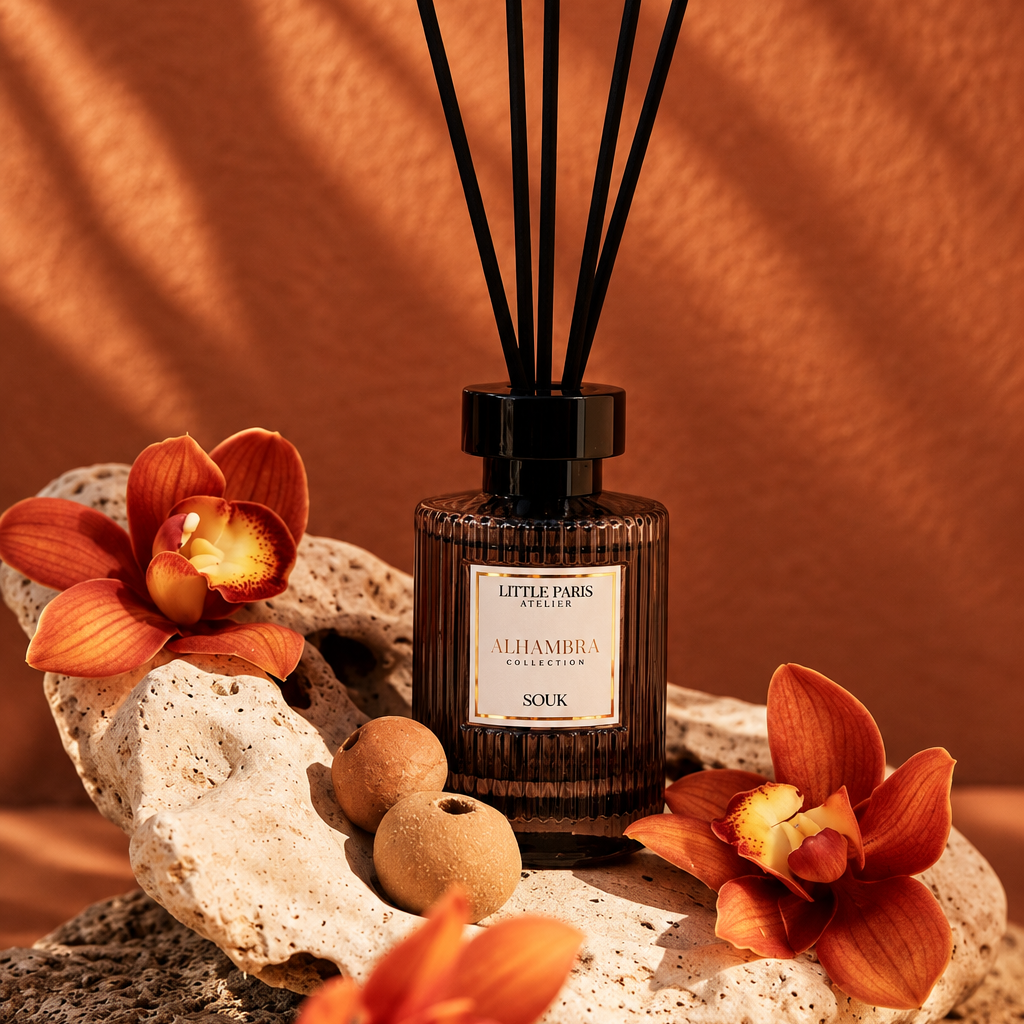
Sandalwood in the Little Paris Atelier collections
Sandalwood has a special quality: it can transform the character of a fragrance without dominating its other notes. Sometimes it is warm and sensual, at other times discreet, almost transparent.
In Spicy Romance, sandalwood meets black pepper and amber, shaping a spicy, deep and intimate composition.
In Maison d’Oranger, we discover it in an entirely different guise. The freshness of mandarin and yuzu meets the delicacy of neroli, while sandalwood, musk and caramel bring a subtle warmth that rounds out the whole composition.
Two interpretations of the same note, showing just how versatile sandalwood can be in home fragrance.
How do you recognise a sandalwood note when you smell a fragrance?
Try to notice the texture first, not the intensity. Does the fragrance have a creamy roundness? Is there a discreet sweetness, without a dessert effect? Does a soft woody sensation remain in the background, even after the brighter notes have faded?
These clues may suggest a sandalwood accord, but they are not a reliable test of the ingredients. A fragrance may combine sandalwood with cedarwood, vetiver, frankincense or oud, and the boundaries between olfactory impressions are not always clear.
Discover Little Paris Atelier
Wood, in all its nuances
From green, luminous accords to warm, balsamic compositions, discover the scented candles created in our Bucharest atelier.
Discover the scented candle collectionFrequently asked questions about sandalwood
How does sandalwood smell?
Usually creamy, woody and velvety, sometimes with milky, balsamic or slightly sweet nuances. The profile depends on the material used and the rest of the composition.
Is sandalwood the same as cedarwood?
No. They are different woody materials. Cedarwood is often perceived as drier and sharper, while classic sandalwood has a rounder, creamier character.
Why is natural sandalwood so precious?
The trees need time to form aromatic wood, and availability and price depend on species, provenance, oil quality and harvesting practices.
Does a fragrance with sandalwood notes necessarily contain natural oil?
No. The note may come from natural oil, from aromatic molecules or from an accord combining several materials. The list of notes is not the same as the formula of the fragrance.
Which notes pair beautifully with sandalwood?
Flowers such as rose and jasmine, but also amber, musk, citrus, vanilla and green notes. The result depends on the proportions and the character of the fragrance as a whole.


