
Oud in Perfumery: The History of the World's Most Precious Wood
Some woods hold the scent of the forest. And there is one wood that develops its fragrance in response to a wound. Oud is one of nature's most fascinating paradoxes, and perfumery has turned it into an entire world of scent.
Beyond its woody, mysterious character, oud carries a story about nature, time and tradition. To understand its place in perfumery, it is worth starting with how it forms.
The short answer
Oud is the resin-rich aromatic wood, also known as agarwood, that forms in certain species of Aquilaria and Gyrinops trees. It can yield an oil prized in perfumery for its woody, complex character.
What is oud?
Oud, also known as agarwood, aloeswood, gaharu or oudh, comes from the resin-impregnated aromatic wood of certain trees, chiefly of the genera Aquilaria and Gyrinops, native to Asia.
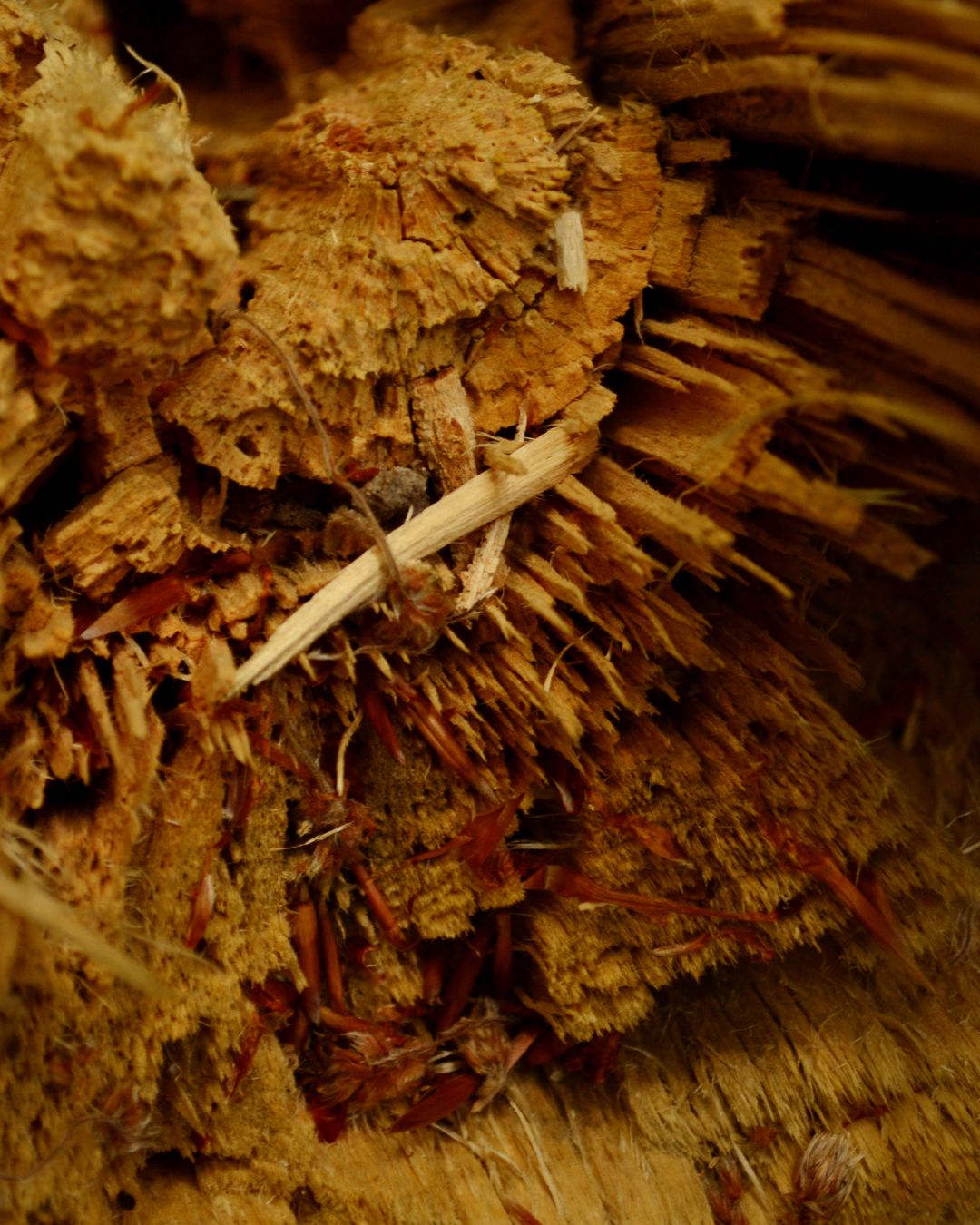
Not every tree produces agarwood. In nature, it forms in response to wounds, microbial attack or other sources of stress. The tree produces defensive compounds which, over time, permeate the woody tissue. The wood darkens and develops a complex fragrance, quite unlike the ordinary smell of timber. Natural oud oil can be extracted from these resin-rich sections.

Oud: a history that crosses cultures
Long before it appeared in the collections of the great European perfume houses, agarwood was treasured across Asia and the Middle East.
In India and China, the aromatic wood was used in cultural and spiritual traditions. In Japan, the appreciation of fragrant wood became an art in its own right, known as kōdō. The phrase "listening to incense" captures the experience perfectly: it is not simply about recognising a smell, but about paying attention to it, discovering its nuances and noticing how it unfolds.
In the Middle East, oud is present in personal perfumery, in perfume oils and in the rituals of scenting the home. The aromatic wood is warmed to release a fragrant smoke, becoming part of the atmosphere of the house and of the tradition of hospitality.
In Western perfumery, oud gained visibility mainly in the early 2000s. The launch of M7 by Yves Saint Laurent in 2002 is regarded as one of the key moments in its popularisation. Interpretations such as Tom Ford's Oud Wood and Maison Francis Kurkdjian's Oud Satin Mood followed, showing just how differently the same olfactory world can be expressed.
Why is oud so valuable?
The price of natural oud reflects a combination of rarity, time, complex extraction and international demand.
Rarity: not every tree produces agarwood
In natural forests, only a proportion of the trees capable of producing agarwood actually develop the aromatic wood. The proportion varies with species and local conditions; there is no universally valid percentage.
How oud forms: the tree's defensive response
The process begins when certain tissues of the tree are damaged. Wounds, microbial activity and other forms of stress can trigger complex biological reactions that lead to the build-up of aromatic compounds. Over time, the wood takes on a darker colour and a different aromatic density.
Expert note
A fragrance born of stress
One of agarwood's peculiarities is that its fragrance is not an ordinary feature of healthy wood. It develops as a result of the tree's reaction to stress. This is why two pieces of wood, even from the same species, can have very different aromatic profiles.

Extraction: from wood to oud oil
One of the traditional extraction methods is hydrodistillation. The resin-rich wood is broken down and processed with water and heat so that the volatile aromatic compounds can be collected. The length of the process, the preparation of the wood and the technique used all influence the result.

Yield and price
There is no universal price for oud. Its value depends on provenance, species, resin concentration, olfactory profile, extraction yield and traceability. Some natural oils of exceptional quality can command very high prices, yet not every product that mentions oud contains such an extract.
What does oud smell like?
Describing oud as "woody" is accurate, but incomplete. Depending on provenance and extraction, it can show facets of smoke, leather, resins, damp earth, honey, tobacco or even fruit. Some varieties are intense and animalic. Others have a softer, almost velvety texture.
The core character: woody, balsamic, sometimes animalic
Cedarwood is often perceived as dry, clean and structured. Sandalwood can be creamy and smooth. Oud can bring a darker dimension, with resinous, smoky or leathery accents. Not all of these facets are present in every oud oil or accord.
Depth: a scent that transforms
Within a composition, oud can contribute a sense of depth and shape how the base notes evolve. As the more volatile notes fade, its woody, balsamic or smoky character can become more evident. Longevity, however, depends on the complete formula, the concentration and how the product is used.
Geographical differences
In olfactory descriptions of natural oils, certain origins are associated with recognisable profiles. Cambodian oud is sometimes described with sweet, fruity or honeyed facets. Some varieties from Assam are known for their pronounced animalic character. These descriptions are a guide, not fixed rules.
The less expected facets
What makes oud so interesting is its ability to bring together seemingly contradictory sensations: dry and balsamic, dark and sweet, smoky and delicate.
Expert note
Why two oud fragrances can smell completely different
The word "oud" in an olfactory pyramid does not describe a standardised formula. One perfumer may bring out its smoky, leathery facets, while another may build a velvety accord with creamy woods and amber notes.
The main Aquilaria species compared
Several tree species are associated with agarwood production.
| Species | Regions | Particularities |
|---|---|---|
| Aquilaria malaccensis | South and South-East Asia | An important species in the history of the agarwood trade |
| Aquilaria crassna | Cambodia, Vietnam, Laos and neighbouring regions | Used in regional production of aromatic wood |
| Aquilaria sinensis | Southern China | Associated with the Chinese tradition of fragrant wood |
Species is only one of the factors that shape aromatic character. The quality of the resin, the growing conditions and the extraction can play an equally important role.
Conservation and international trade
High demand for agarwood has put pressure on wild populations. The genera Aquilaria and Gyrinops are listed in Appendix II of the CITES convention, which means that international trade in the specimens and products covered by the regulation is controlled.
Expert note
What does CITES mean?
CITES is the Convention on International Trade in Endangered Species of Wild Fauna and Flora. Listing a species in Appendix II does not mean that all trade is banned, but that it is regulated to prevent unsustainable exploitation. More about how CITES works.
Natural oud and oud accord: what is the difference?
Natural oud comes from aromatic agarwood, obtained through specific extraction processes. An oud accord is an olfactory construction designed to evoke certain of its facets: the deep wood, the smoke, the leather, the resins or the balsamic warmth.
Such an accord may combine several aromatic materials to create a coherent interpretation. It is not, by definition, an inferior version: it is simply another instrument in the perfumer's palette.
Expert note
The olfactory pyramid is not the formula
When we read "oud", "rose" or "jasmine" in a fragrance description, we are reading a representation of the olfactory experience, not necessarily a list of the natural extracts used. This distinction holds as true for personal perfumery as it does for scented candles and diffusers.
Worth remembering
Fragrance notes describe how a scent smells; they do not reveal its recipe. An oud accord can be a creative choice, not merely an alternative to natural oud.
How is oud perceived, olfactively and culturally?
For some people, oud is a familiar scent, associated with home, family or particular traditions. For others, the first encounter can be surprising. Its animalic, resinous or smoky facets can seem very different from the floral and citrus fragrances they are used to.
Olfactory perception is shaped by experience, culture and memory. A scent that evokes a familiar ritual for one person may suggest a journey, or the atmosphere of an unknown place, to another.
In which seasons is oud most appreciated?
In Western perfumery, oud is often associated with autumn and winter. Its woody, warm and sometimes intense character suits the preference for deeper scents in the colder months.
But oud is not reserved for winter evenings alone. Paired with citrus, sheer florals or green notes, it can become luminous and surprisingly airy. What matters is the olfactory interpretation, the intensity and personal preference.
Which notes pair best with oud?
Oud and rose
A classic pairing, cherished in many perfume traditions. Rose brings a generous floral expression, while oud contributes depth and contrast. The result can be opulent, romantic or surprisingly contemporary.
Oud and jasmine
Jasmine introduces a sensual floral dimension. Alongside oud, it can create an elegant tension between the brightness of the flowers and the dark character of the wood.
Oud and saffron
Saffron can bring spicy, warm and sometimes leathery accents, well suited to complex, textured compositions.
Oud and amber notes
Amber accords can round out the character of oud, adding warmth, sweetness or a balsamic softness.
Oud and incense
Incense can bring resinous, mineral or smoky accents. Together, the two notes can create contemplative, atmospheric compositions.
Oud and citrus
Bergamot and mandarin can brighten an oud accord. The contrast between the freshness of citrus and the depth of the wood can turn an intense composition into a more airy one.
How is oud used to scent the home?
Bakhoor and agarwood chips
Fragments of aromatic wood can be warmed to release the scent of the resin. Bakhoor is a category of fragrant materials for burning, which may include wood, resins and other aromatic ingredients.
Scented candles with oud notes
In contemporary home fragrance, oud accords make it possible to explore very different atmospheres. An accord with smoky facets can suggest intimacy and depth. Paired with cedarwood or sandalwood, it can become more structured and calm. Combined with flowers, it can take on an unexpected elegance.
Reed diffusers
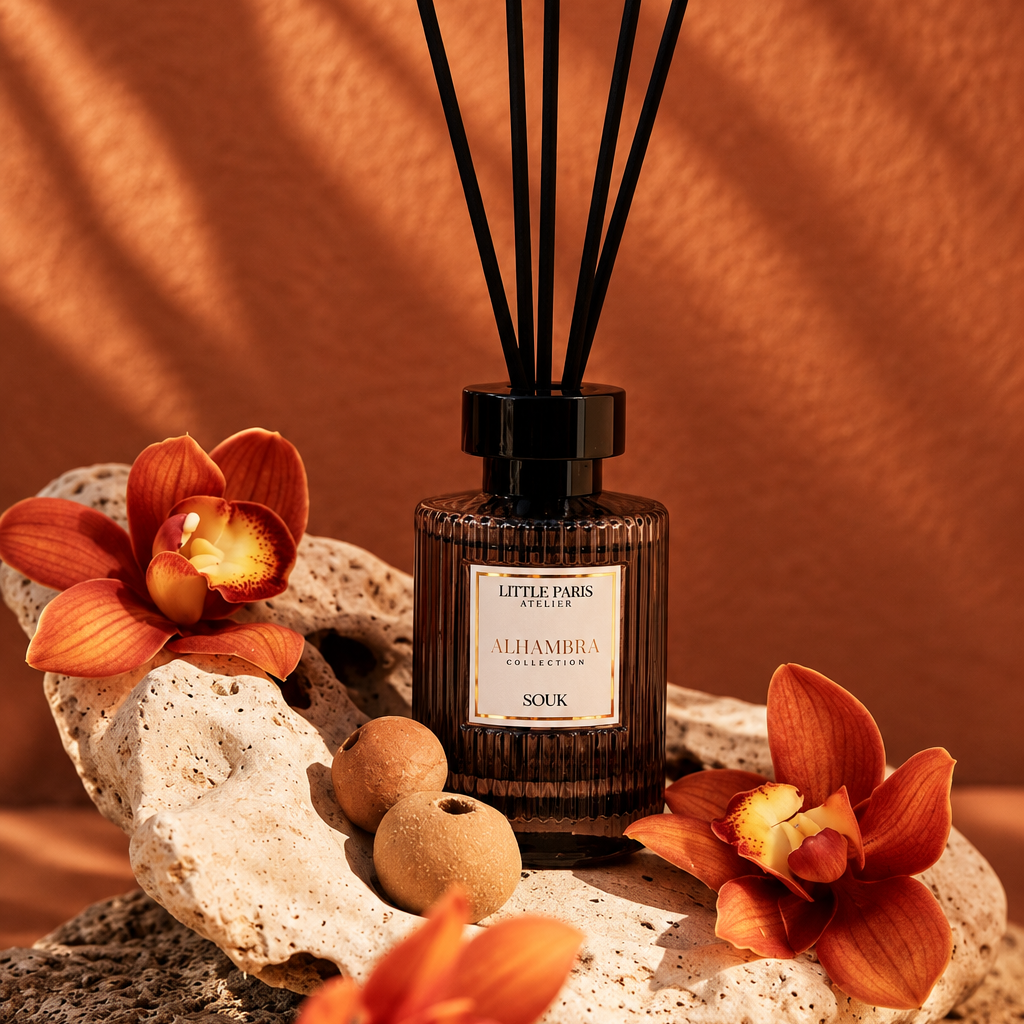
In a diffuser, oud notes can contribute to a warm, woody atmosphere. The final character depends on the composition, the diffusion system and the space in which the product is used.
Oud in contemporary perfumery
In contemporary perfumery, oud has also been popularised by creations such as M7 by Yves Saint Laurent, Oud Wood by Tom Ford and Oud Satin Mood by Maison Francis Kurkdjian. Each offers a different interpretation of the note, demonstrating just how versatile its woody character can be.
The Little Paris Atelier interpretation
At Little Paris Atelier, we are interested in the way a fragrance can transform the atmosphere of a space and stir an emotion.
Oud is one of those notes that offers extraordinary freedom of interpretation. It can be dark and mysterious, but also floral, velvety or surprisingly delicate.
In Sombra, from the Alhambra collection, Moroccan Cedarwood, Oud and Jasmine build a warm, deep atmosphere. The woody character meets a subtle floral expression, in a fragrance inspired by the last moments of the day, when the light fades but the warmth stays held in the stone.
In A Love Letter, oud meets Damask Rose in a composition that explores another side of the note. Floral, spicy and woody accents create a romantic, warm and intimate atmosphere.
Two different interpretations of oud. Two ways of building an atmosphere. Because in perfumery, it is not only the note that matters, but what you choose to express through it.
Oud at a glance
| Characteristic | Details |
|---|---|
| Origin | Resin-impregnated aromatic wood produced by certain species of Aquilaria and Gyrinops |
| Other names | Agarwood, aloeswood, gaharu, oudh |
| Olfactory family | Woody, with balsamic, smoky or animalic facets |
| Olfactory character | Deep, complex, variable |
| Complementary notes | Rose, jasmine, saffron, incense, citrus, amber notes |
| Season | Often associated with the colder months, but not exclusively |
| Uses | Personal perfumery, home fragrance, aromatic wood |
| Natural vs accord | An oud note does not guarantee the presence of the natural extract |
| Regulation | International trade in the relevant species is controlled under CITES |
Oud remains one of the most fascinating expressions of wood in perfumery. Born of an unusual natural process, carrying centuries of tradition and continually reinterpreted by perfumers, it is a raw material that cannot be reduced to a single description. Sometimes dark, sometimes velvety. Sometimes intense, sometimes almost imperceptible. Perhaps it is precisely this capacity for transformation that keeps oud so captivating.
Discover Little Paris Atelier
The fragrance that gives a space its depth
From woody and floral accords to warm, mysterious compositions, discover the Little Paris Atelier scented candles.
Discover the scented candle collectionExplore Sombra and A Love Letter, two different interpretations of the oud note.
Frequently asked questions about oud
What is oud?
Oud is the name given to the resin-rich aromatic wood known as agarwood, and also to the fragrant oil extracted from it.
What does oud smell like?
It can have woody, smoky, balsamic, animalic, leathery or honeyed notes. The profile varies with origin and extraction.
Why is it so expensive?
Natural formation is rare, and production and extraction take time and resources. Its value depends greatly on quality and provenance.
What is the difference between natural oud and an oud accord?
Natural oud comes from aromatic agarwood. An oud accord is an olfactory interpretation created by combining aromatic materials.
Is oud legal?
Yes, but international trade in the relevant species and certain derived products is regulated under CITES.
Is oud a masculine note?
No. Oud can appear in floral, woody, amber or delicate fragrances without belonging to any particular gender.
Is oud only for winter?
No. Although it is often associated with the colder months, it can also be reinterpreted in luminous compositions suited to other seasons.
Is oud used in home fragrance?
Yes. Agarwood has traditionally been used to scent spaces, and oud accords are found in contemporary candles and diffusers.
Which Little Paris Atelier candles feature oud notes?
Sombra explores the pairing of Moroccan Cedarwood, Oud and Jasmine, while A Love Letter celebrates the meeting of rose and oud.
How can I discover oud if I have never tried a fragrance with this note?
You can start with interpretations in which oud is balanced by floral, citrus or softer woody notes. These let you explore its character without its intensity dominating the whole experience.