
The most beautiful home fragrances for autumn: which notes to choose
Autumn does not simply ask for warmer fragrances. It asks for more wood, more resin and, sometimes, a little less light. As the days grow shorter and we spend more time indoors, the way we want our home to smell changes too.
The short answer
The most beautiful home fragrances for autumn usually follow a few olfactory directions: woody, with cedarwood, vetiver or sandalwood; amber, with tonka and warm, balsamic or vanilla accords; gourmand, with vanilla, coffee or caramel; deep fruits, with plum, pear or red berries; and spicy, with cinnamon, clove or pepper.
But an autumn fragrance does not have to be sweet, nor does it have to smell of cinnamon. Autumn can be green and damp, woody and mineral, dark and resinous, or warm and gourmand.
Why we are drawn to different fragrances when autumn arrives
The fragrance of a home does not exist apart from its atmosphere.
In summer the windows are open, there is more light, the air moves and we spend less time indoors. In autumn, the home gradually becomes a place where we stay longer. Heavier textiles appear, the evenings lengthen, the light turns warm and we return to the rituals we associate with the colder season.
That is why the fragrances we found beautiful in July can feel different in October. Not because we must give up citrus or flowers the moment the first leaf falls, but because we begin to look for other sensations.
Wood brings structure. Resins bring depth. Vanilla and tonka can create warmth. Vetiver can suggest damp earth and coolness. Plum and other dark fruits give a fragrance a denser, almost velvety feel.
An autumn fragrance is, above all, an atmosphere.
Expert note
Do not judge a scented candle simply by smelling the cold wax. The fragrance you perceive straight from the vessel and the one that builds in the room as it burns can be quite different. Let the candle form a generous pool of melted wax and notice the fragrance in the space, not just above the jar.
Five olfactory directions we love in autumn
1. Woody: cedarwood, vetiver and sandalwood
Woody fragrances are probably the simplest choice if you want your home to take on an autumnal air without necessarily becoming sweet.
Cedarwood can be dry and elegant, sandalwood is creamier and rounder, and vetiver can show green, earthy or smoky facets. Alongside patchouli, saffron, tobacco or spices, wood gains even more depth.
Woodland Thoughts, with vetiver, cedarwood and saffron, is one of our most direct interpretations of this family.
Nocturne moves in a darker direction, with oak wood, saffron and vanilla, especially well suited to long autumn evenings.
2. Amber: warm, deep, velvety
Amber accords can bring warmth and depth without turning a fragrance into a dessert. They can be balsamic and vanilla-like, but also woody, green or slightly earthy, depending on the notes built around them.
And a distinction is worth making: in perfumery, "amber" describes an olfactory character, usually warm, balsamic or vanilla-like. It does not simply mean that the fragrance contains "amber" the gemstone.
Verde Mare is a beautiful example of a transitional fragrance. Fig keeps something of the summer light, while vetiver, tonka and oakmoss bring depth and warmth.
It is the kind of fragrance you choose when the light outside still belongs to summer, but autumn has already begun indoors.
A small perfumery lesson
Amber does not automatically mean sweet. An amber accord can be vanilla-soft and velvety, but it can just as easily lean dry, woody or spicy, depending on the materials built around it.
3. Gourmand: vanilla, coffee and caramel, but in balance
Gourmands are probably the fragrances most readily associated with the colder season.
Vanilla. Caramel. Coffee. Biscuits. Baked fruit.
They are comforting precisely because they lead us towards things we can almost taste. But there is a fine line here between cosy and too sweet. The most interesting gourmand compositions have contrast.
Secrets in the Oven combines apple with vanilla and caramel, keeping a fruity facet amid the sweet notes.
French Brew goes in a darker direction, with roasted coffee, crème brûlée and biscuits, the kind of fragrance that recalls a slow October morning.
If sweet fragrances are not for you, it does not mean you do not like autumn fragrances. Perhaps your autumn smells more of vetiver, cedarwood, patchouli or frankincense.
4. Deep fruits: plum, pear and red berries
Not all fruity fragrances are bright and summery.
Plum, cranberries, pears and red berries can take on an entirely different personality when paired with wood, patchouli or spices. They become darker, sometimes slightly winey, and far better suited to the colder season.
Impassioned Plum pairs plum with nutmeg and patchouli in a rich, spicy interpretation of autumn fruit.
Berry Pie, with cranberry, orange and pear, is the brighter, more gourmand alternative within this family.
5. Spicy: when autumn begins to resemble winter
Cinnamon, clove, pepper and nutmeg have an almost instant association with the colder season. But spices do not automatically mean Christmas.
Depending on what surrounds them, they can be warm and gourmand, dry and woody, or dark and sensual.
Night at the Chalet, with burnt wood, vanilla and clove, leans towards the warm, comforting side of this family.
Spicy Romance shows another face of spice, drier, woodier and more sensual, with black pepper at the heart of the composition.
Autumn does not have to smell of cinnamon
It is worth saying on its own.
If you do not like sweet fragrances, vanilla, caramel or the classic apple and cinnamon pairings, you still have an enormous palette to choose from.
You can build an autumn atmosphere with cedarwood and vetiver, with patchouli and plum, with frankincense and resins or with sandalwood and tonka.
An olfactory autumn can be cosy, but it can just as well be green, mineral, smoky, elegant or dark.
How the fragrance of your home changes from September to November
You do not have to change your home fragrance on the first day of September. An olfactory autumn can enter the home gradually.
| Month | Atmosphere | Notes to try |
|---|---|---|
| September | Transitional, still airy | Vetiver, cedarwood, green notes, mineral notes |
| October | Warm, rich, textured | Plum, patchouli, vanilla, coffee |
| November | Deep, warm, close to winter | Resins, amber, clove, burnt wood |
It is not a rule. It is rather a lovely way of letting the fragrance of your home follow the turning of the season.
Candle or diffuser for autumn?
You do not necessarily have to choose between them, because they play different roles.
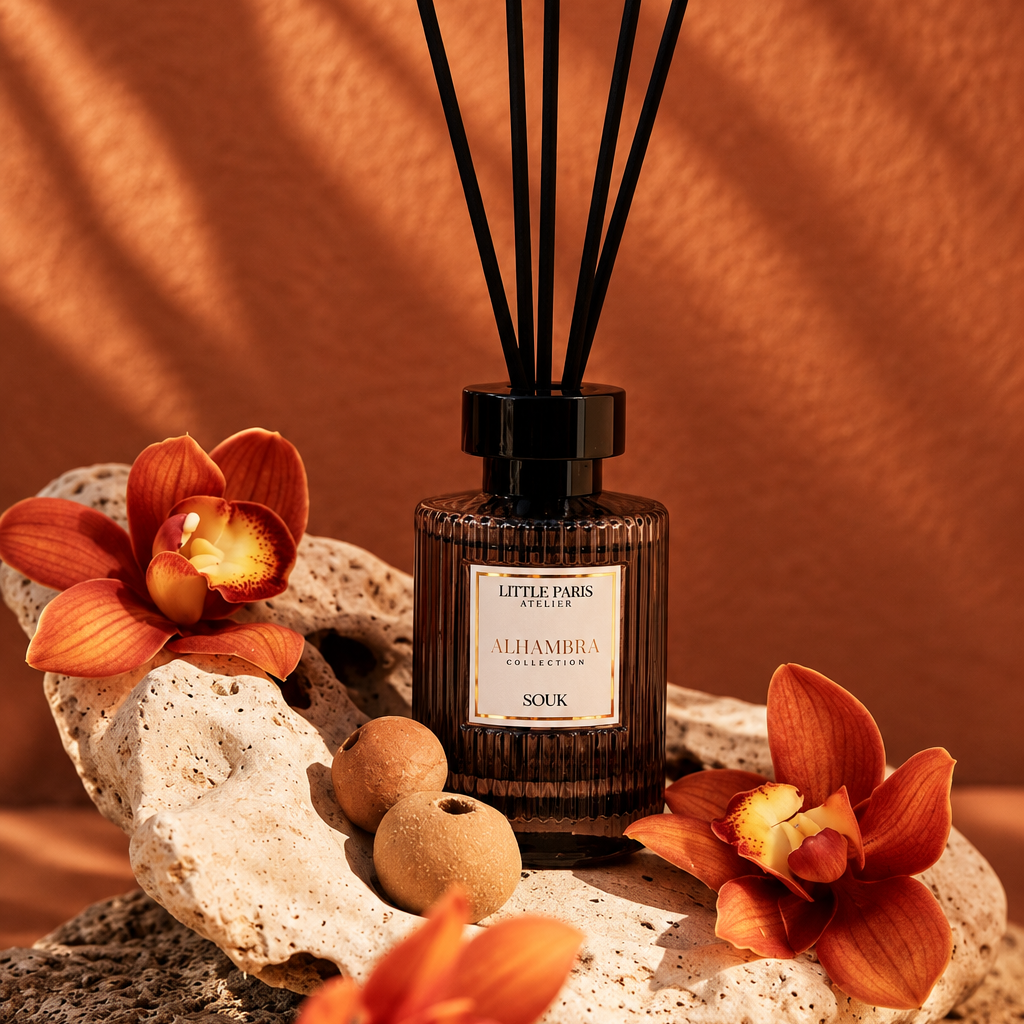
A reed diffuser builds the olfactory backdrop of a room. The fragrance is constantly present and needs no lighting, which makes it well suited to the hallway, the bathroom or other spaces we pass through several times a day.
A scented candle is more of a ritual. You light it when you want to change the atmosphere of a room, and the light of the flame itself becomes part of the experience.
In autumn, the two can work beautifully together: a discreet, constant fragrance from the diffuser, over which you add, in the evening, a candle from the same olfactory family or a complementary one.
One fragrance, or a different one for each room?
There is no need for the whole home to smell identical.
In a large living room you can use a deeper, woody or fruity composition. For the bedroom you might choose something calmer and less gourmand. The hallway is a very good place for a diffuser, since the fragrance becomes one of the first impressions you have as you walk in.
What matters is a certain continuity between the fragrances, so that moving from one room to the next does not feel like a succession of unrelated scents.
If you would like to go further, see how to combine fragrances at home through scent layering, with concrete examples of candles and diffusers.
Discover Little Paris Atelier
Fragrances for evenings that begin earlier
Autumn can smell of wood and vetiver, of plum and patchouli, of roasted coffee or of vanilla and clove. Little Paris Atelier candles are hand poured in Bucharest from soy wax, in olfactory compositions created to change the atmosphere of a space. For a continuous, flame-free fragrance, you can choose a room diffuser.
Frequently asked questions about autumn home fragrances
Which home fragrances suit autumn best?
Woody, amber, resinous, gourmand and spicy notes, along with deeper fruits, work very well in the colder season. Cedarwood, vetiver, sandalwood, vanilla, tonka, coffee, plum, patchouli, frankincense and clove are a few examples. The choice, however, depends more on the atmosphere you want to create than on any seasonal rule.
Does an autumn fragrance have to be sweet?
No. If you do not like gourmand fragrances, you can choose cedarwood, vetiver, sandalwood, patchouli, frankincense or other woody and resinous notes. They can create the same feeling of warmth and depth without vanilla or caramel.
Can I use citrus fragrances in autumn too?
Of course. Bergamot, orange and other citrus notes can bring light to a deeper composition and work beautifully alongside wood, spices or resins. The season need not dictate rigidly which fragrances you use.
When should I switch to autumn fragrances?
There is no set date. You can begin in September with greener, woodier fragrances, then gradually introduce richer, fruity, amber or spicy compositions as the weather cools.
Can I use the same fragrance throughout the home?
Yes, especially if you want to create a unified olfactory signature. Alternatively, you can use complementary fragrances in different rooms, keeping a shared note or olfactory family between them.
Candle or diffuser for autumn?
A diffuser is suited to continuous fragrance, while a candle adds fragrance when you light it and turns its use into a ritual. The two can also be used together, choosing complementary compositions.